Readercon 22

•July 7, 2011 • 6 Comments

I’ll be over in Boston for Readercon next week. I have a very exciting (if potentially exhausting) schedule as below. Will hope to see some of you there – do come up and say hi!

Friday July 15

12:00 PM F Plausible Miracles and Eucatastrophe. Chesya Burke, John Crowley, John Kessel (leader), James Morrow, Graham Sleight. Mark Twain instructed other writers that “the personages of a tale shall confine themselves to possibilities and let miracles alone; or, if they venture a miracle, the author must so plausibly set it forth as to make it look possible and reasonable.” This rule can be generalized: the more favorable to the characters an unexpected plot turn is, the better it needs to be set up (see the end of James Morrow’s Only Begotten Daughter). But what about eucatastrophe, where the power of a happy ending comes from its unexpectedness? Is the eucatastrophe in fact a form of plausible miracle where the plausibility derives not from things the author has put in the text, but from beliefs the reader already had, perhaps without knowing it? Or is there another explanation?

1:00 PM F Well, We Know Where We’re Going: The Pseudo-Religiosity of Teleological SF. John Crowley, Barry N. Malzberg, James Morrow, Kathryn Morrow, Graham Sleight (leader). The late Charles N. Brown was a great advocate of the idea that science fiction was teleological: even if it didn’t predict the future, it told us the kind of direction our species was heading. Books like Stapledon’s Last and First Men, Clarke’s Childhood’s End, and Greg Bear’s Blood Music are about that kind of ultimate destiny. But are they also offering a kind of pseudo-religious consolation, a final goal without a God watching over it? When readers seek out science fiction that posits or imagines some kind of final destiny for humanity, are they driven by the same yearning for certainty (even uncomfortable or unhappy certainty) that leads many people to religion?

2:00 PM ME The Readercon New Nonfiction Book Club: Evaporating Genres. John Clute, F. Brett Cox (leader), David G. Hartwell, Graham Sleight, Peter Straub. Evaporating Genres: Essays on Fantastic Literature, Gary K. Wolfe’s collection of eleven linked essays, was described by reviewer Jonathan McCalmont as “a quietly revolutionary piece of methodological advocacy that urges its readers to open their minds and their hearts to the chaos at the heart of genre.” Wolfe argues that science fiction, fantasy, and horror are by their nature inherently unstable, evolving, merging with each other and with a wide variety of other fictional traditions, until they eventually “evaporate” into new forms, and that such metamorphoses have been especially volatile over the past few decades. But is there really “chaos at the heart of genre”? And is it true, as Wolfe seems to contend, that without this inherent instability genre fiction may be doomed to self-referentiality and eventual ossification?

4:00 PM F SF as Tragedy. John Clute, Samuel R. Delany, Gardner Dozois, Barry N. Malzberg, Graham Sleight (leader). Gardner Dozois’s collection Geodesic Dreams has an epigraph from James Tiptree, Jr.: “Man is an animal whose dreams come true and kill him.” In Dozois and Tiptree, protagonists fail–and often die–because of something inherent in their biological or social makeup (q.v. “Love is the Plan, the Plan is Death,” “The Peacemaker,” or “A Kingdom by the Sea”). Where classical ideas of tragedy involve unwise choices, the characters in Tiptree-esque tragic SF ultimately have no choices at all. What other works of speculative fiction do this? How does the science fiction setting accommodate the expansion of the tragic argument? And what makes these bleak stories so appealing?

7:00 PM G Is “The Death of the Author” Dying?. K. Tempest Bradford, Jack M. Haringa, John Kessel, Eugene Mirabelli, Graham Sleight (leader). It’s long been accepted wisdom in literary criticism that the meaning intended by an author is not of prime relevance to the job of reading or interpretation; to think otherwise is to commit the “intentional fallacy.” But today’s authors have bold new technological avenues to tell us what their story is supposed to mean (e.g. Anne Rice’s famous “You’re reading it wrong” pronouncement). Will texts and critical reading necessarily suffer as authors and readers conduct meta-conversations in blogs and on Facebook? Is an author’s blog post telling us how to read their book really different from an introduction or afterword? And what can we learn about the intentional fallacy by observing the authors who say it’s not a fallacy at all?

Saturday July 16

10:00 AM RI The Year in Novels. Graham Sleight, Liza Groen Trombi (leader), Paul Witcover, Gary K. Wolfe. We will discuss the speculative novels published since last Readercon.

1:00 PM ME Mind the Gap. Graham Sleight. What links the Doctor Who story “Frontios,” Schrodinger’s cat, Shirley Jackson’s “The Intoxicated,” and C.P. Snow’s idea of the “Two Cultures”? How is fanfiction like damp-proofing? And what does stage magic owe to Keats? Graham Sleight will attempt to answer these questions while putting forward some ideas about where the fantastic has come from and where it’s going.

5:00 PM F Geoff Ryman Interviewed. Geoff Ryman, Graham Sleight (moderator). Graham Sleight interviews Guest of Honor Geoff Ryman.
Cambridge Companion to Fantasy Literature

•June 25, 2011 • Leave a Comment

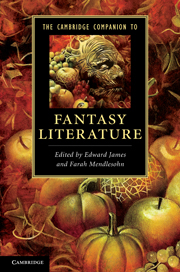
I’m spending a lot of time working on The Encyclopedia of Science Fiction at the moment – and please note that we have both a Twitter feed and a Facebook page – but news today of an entirely different project. This is The Cambridge Companion to Fantasy Literature, edited by Edward James and Farah Mendlesohn, and published by CUP on (it says here) 31st December 2011. The lovely cover, left, is by John Picacio.

My chapter in the book is on religion and fantasy literature and, as you can see from the CUP site, there’s a stellar line-up of other contributors. You can pre-order either the hardback or paperback from Amazon now.

Published!

•March 12, 2011 • Leave a Comment

I’m just off to the International Conference on the Fantastic in the Arts, where I’ll be appearing on a panel about critical writing done from outside academia. But I’d be remiss if I didn’t note that The Unsilent Library – the book on new Doctor Who edited by myself, Simon Bradshaw, and Tony Keen – is now out, and can be ordered from Amazon.

100

•March 9, 2011 • Leave a Comment

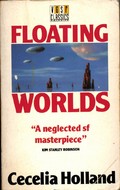
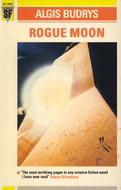
I’ve just updated my list of forthcoming books in the Gollancz Sf Masterworks series to the 100th title, due April 2012. Of the six new titles I’ve added, I’m especially glad to see Cecelia Holland’s Floating Worlds and Algis Budrys’s Rogue Moon, books that formed my sf reading tastes a few decades ago. I doubt, however, that Gollancz will be recycling the cover art from the fondly-remembered late-80s editions…

Me, elsewhere

•February 27, 2011 • Leave a Comment


Well, the DVD of The Ark is out, and indeed debuted at No 1 on the UK TV DVD chart: I somehow doubt, however, that this was due to my presence as a talking head on it. Also out are the new SF Masterworks editions of Gibson and Sterling’s The Difference Engine and Priest’s The Prestige, both with introductions by me; and the SF Foundation’s book on Doctor Who, The Unsilent Library, co-edited and with a paper by me.

Meanwhile, I’ve just blogged over at the Locus Roundtable about the National Theatre’s new production of Frankenstein, and a piece about Doris Lessing’s Canopus in Argos sequence appeared in the February edition of Locus – also online.

And, in other news, the most fascinating (if profane) work of speculative fiction I’ve read recently is the fake tweets of @mayoremanuel : if you missed him before he vanished into a time vortex, or lack the requisite lifelong knowledge of Chicago politics, Bill Shunn has the necessary briefing.

The Ark

•January 8, 2011 • 1 Comment

Since the preview DVDs and press releases have gone out, I can now tell you about my small part in the forthcoming BBC DVD release of the 1966 Doctor Who story The Ark. A while ago, I went down to a recording studio in Kentish Town, where m’colleague Simon Guerrier and his brother Tom pointed a camera at me and asked me questions about the influence of H.G. Wells on Doctor Who – an influence especially relevant to this story. At this stage, I can’t remember the details of what I said – and nor have I seen the final cut of the documentary Simon and Tom produced, which appears on the DVD. (All I remember, in fact, is that the recording studio was filled with extremely nice guitars, which I had to restrain myself mightily from playing around with.) However, I do know that the documentary also features such luminaries as Kim Newman, Dominic Sandbrook, Tony Keen, and Matthew Sweet. The DVD is out on February 14th, and can be pre-ordered from amazon here.

Happy new year!

•January 3, 2011 • Leave a Comment

First of all, if you’re visiting having followed links from my tor.com post on Christopher Eccleston’s time in Doctor Who: hello and welcome! If you want to find out more about the various projects I’m working on, this is probably the best place to start. Secondly, if you haven’t yet seen the post, it’s over here. It’s part of tor.com ‘s splendid “Twelve Doctors of Christmas” series, also featuring contributions from Paul Cornell, Nicholas Whyte, Seanan McGuire, and others.

Among other things, I’ve also updated the list of forthcoming books in the SF Masterworks series, for which I and Adam Roberts are currently writing introductions. In the meantime, I’m spending a lot of time proofing The Unsilent Library and doing last rewrites on The Doctor’s Monsters: more news on both soon…

The Unsilent Library

•November 15, 2010 • Leave a Comment

I’ve just added a new page giving details about The Unsilent Library, a book I’m editing along with Simon Bradshaw and Antony Keen about the revived series of Doctor Who. It should be out early next year.

In other news, I’m currently working on rewrites to The Doctor’s Monsters, bringing it up-to-date to cover the 2010 series of Doctor Who and, believe it or not, working on things that aren’t to do with Doctor Who. I’ve been finishing off editorial work on a couple of issues of Foundation which should be out before the end of the year; writing introductions to the forthcoming Gollancz editions of Sirius, The Difference Engine and The Prestige; talking about mathematical sf at the Locus Roundtable; updating entries for the Encyclopedia of Science Fiction (currently at 11, 106 entries versus 6,571 in the previous edition); contributing program ideas for the next installment of Readercon; and plotting a couple of new ventures which I hope I’ll be able to talk about here shortly.

More updates soon, I promise, just as soon as I get to Inbox = 0 …

Three things

•September 22, 2010 • 1 Comment

1) I’ve just received a copy of the lovely new SF Masterworks edition of Jack Finney’s The Body Snatchers, with intro by me. Obviously it’s a terrific book, but I wanted especially to flag it here because of the cover art. The back cover says it’s “based on” an original piece by Dominic Harman. I don’t know what that credit entails/means in detail, but the cover is just brilliantly disturbing, especially when you look at it up close – and very appropriate for the book.

2) London people may be interested in this evening’s BSFA discussion, between Farah Mendlesohn and Charles Butler on the work of one of the UK’s great fantasists, Dianne Wynne-Jones. Venue as usual is the Antelope pub in Belgravia from 7pm.

3) Not strictly relevant to my own work, but I was delighted to see that Dennis Potter’s last TV drama, the sf series Cold Lazarus (1996), is at last out on DVD along with its contemporary companion-piece Karaoke. I may well wind up posting about it on the Locus blog soon…

The Doctor’s Monsters

•September 5, 2010 • Leave a Comment

Yes, I know I’ve been away a while, but hope to be updating more frequently here now that the summer’s over. There are several exciting secret projects I’m working on at the moment that should become less secret over the course of the autumn. Speaking of which…

I’ve just set up a new page to cover The Doctor’s Monsters, the book on Doctor Who I have forthcoming from I B Tauris next year. I’ll post more information there as soon as I can, but in the meantime you can already pre-order from Amazon…