
Wonders and Visions

•November 3, 2025 • Leave a Comment

[This is the text of a message Adam Roberts and I are sending to all the people who subscribed to the Wonders and Visions project—a visual history of science fiction, traced through cover-art and illustration from the earliest days to the present—back when the publishers Unbound were a going concernBoth Adam and I are also posting the text to our blogs to clarify the situation.]

Dear all

We are emailing with regard to the Wonder and Visions book, which we have been writing over the last several years, and to which you pledged when the project was due to appear under the Unbound imprint. When Unbound went into administration this March, we were told that the book was being taken forward by its successor company Boundless, and we continued working on it. On Friday August 1st, Boundless ceased trading. The larger context is widespread reporting that Unbound had been failing to pay royalties to authors, and that there were underlying issues of financial mismanagement.

Clearly this is an awful set of circumstances—not least for unpaid Unbound authors and for readers who pledged to support books. We have now been told that the rights for Wonders and Visions have reverted to us, which means we are at liberty to find a new publisher for it. The research and writing for Wonders and Visions is mostly done—all other things being equal, we would have had a final draft by the end of 2025, and would have looked to see the book go into production in 2026.

For the record, neither of us has received any payment for the work we’ve done on this book. There was nothing inherently worrying about that: we were to be paid after publication on sales made. We have lost only the labour and time spent researching, writing and assembling the work. As subscribers you, we are aware, have lost the money you pledged.

We are emailing you all to apprise you of the situation, and to canvas opinion on what to do, to see what people would prefer in terms of going forward.

To be clear: we are writing in a purely personal capacity: there is no further support or input from Boundless, which has ceased to exist as a company. This message is just us.

Since the rights have reverted to us, we are legally able to approach another publisher with the project. We can do this, although realistically it is not likely a regular press will take up the book. The money raised via your pledges was to be used to fund three things: one, the salaries of the publishing professionals, the editors, legal, proofing, designers and compositors, who would have set the book up ready for publication (these people have all lost their jobs, and gained nothing, from the collapse of the company); two, the physical costs of actually producing the book—paper, full-colour printing, binding, shipping and delivery; and three, very importantly, a fund to cover the copyright permissions. Wonders and Visions was to include SF art from the early nineteenth-century right through to the present day. Some of the earlier material is out of copyright, but all the more recent stuff requires us to obtain permission from the rights holders—usually the specific artist—and to pay them a permissions fee. This is a legal as well as an ethical necessity and the budget set aside to cover it was quite large. To take the project to a new publisher would mean finding one not only willing to publish an expensive, glossy and full-colour book (few publishers do this, although there are some that specialise in it: Phaidon and Thames and Hudson for instance) but also persuading them to shoulder all these additional expenses—as well as the extra cost of providing you, the original Unbound subscribers, with copies of the finished product, since you cannot be expected to pay twice for your book. It is not impossible that this might happen, but it is, frankly, unlikely. For a press to swallow such large upfront costs would only be likely if they thought downstream sales would recoup them all and make a profit, which would only happen if the book were a significant seller. But a project like this, expensive and niche, is unlikely to crack the bestseller lists.

The two of us have discussed alternatives. We could compile the material we have into an ebook, since the illustrations have been selected and the text is pretty much finished. But there are three problems with this. One is that we can’t afford to pay professionals to produce the finished text (the editors, compositors, designers and so on mentioned above), so it would just be the two of us: laborious for us and liable to be more or less amateurish in terms of the finished product. Two is the permissions issue: we would not be offering this ebook for general sale—it would just be for the people who pledged to the original project—but even so legally we would be obliged to obtain and pay permissions for in-copyright work, and we simply don’t have the money. Three is perhaps the biggest problem: you pledged for a professionally produced physical book, and an ebook cobbled together by the two of us would be a very poor substitute for that.

It is possible that what you would like is, simply, your money back. Neither of us can personally reimburse you. We are as much victims of the collapse of Unbound/ Boundless as you—or if not quite as much (as we say, we have lost only our labour, rather than actual money), as authors, not publishers, we are not legally liable. And we are certainly not independently wealthy enough to refund you out of our pockets. If a refund is definitely what you want then we encourage you to email the liquidators at boundless@frpadvisory.com spelling out your situation and requesting reimbursement. We do not know how likely it is that you’ll get money. In the case of bankruptcy, creditors and claimants sometimes get a fraction of what they are owed, but there are many claims upon Unbound/Boundless not least from authors and freelancers who are owed royalties and fees, and it seems as if there is no money left in what used to be the company.

We’d also like to record here how deeply disappointed and frustrated the two of us have been by the whole Unbound/Boundless situation, a circumstance about which we knew nothing until the collapse occurred. We have worked long and hard at a project we both care about, and it is bitter to think it might all have been wasted. It is also worth noting that we both have full-time jobs, which are (for various reasons) particularly time-consuming and encompassing at the moment, and liable to continue being so, for us both, for another year and more; and that Adam has other publishing contracts and writing projects to which he is committed:—which is to say, we don’t have infinite time and personal resources to dedicate to whatever we decide is the best way forward for Wonders and Visions—although we both feel bad that you have all been baulked of your book, a book into which we have put so much time and effort. 

With best wishes,

Adam Roberts

Graham Sleight
Readercon 2023

•July 11, 2023 • Leave a Comment

So it’s been, uh, a while since I posted here. But there’s been a global pandemic and a few other things. I hope to start updating this site a bit more regularly (and, indeed, to redesign it so it looks a little less 2012-ish and rather more accessible.) But for the moment, wanted to note that I’ll be at Readercon in Boston this weekend. Very much looking forward to it, not least as it’s the first in-person Readercon since the pandemic. And I’ll be doing a few panels, as follows:

—-

Thurs 13th, 8.00pm, Salon A

Not another Space Jesus! The Self-Sacrifice Trope in SFF

Graham Sleight (moderator), N S Dolkart, Catt Kingsgrave, Yves Meynard

Science fiction and fantasy are riddled with characters sacrificing themselves for the good of the many, be they the main protagonists whose self-sacrificial plans may or may not pan out, or some helpful side character who swoops in at the last minute to Save Us All with an act of suicidal bravery. Why is this trope so popular and what do we get out of it? Is a blood sacrifice really needed to redeem our fantasy worlds? Redeem them of what?

Friday 14th, 1.00pm, Salon B

The Encyclopedia of Science Fiction, 4th Edition

John Clute, Graham Sleight

The fourth edition of the Encyclopedia of Science Fiction was announced in October 2021 when it moved to a server of its own. John Clute, one of its Editors, and Graham Sleight, Managing Editor, will discuss the new edition, the joys and challenges of maintaining and updating this massive document, and ways to help.

——

Friday 14th, 3.00pm Salon 3

Everything you know is wrong!

Karen Heuler, Charlie Jane Anders, James Patrick Kelly, Erin Roberts, Graham Sleight (moderator)

Infodumps are good. Cliches communicate better than Proustian prose does. A new writer is best off not knowing the history of science fiction. Join our panelists as they discredit as many nuggets of received wisdom about how prose works as they can fit in 50 minutes.

——

Friday 14th, 4.00pm, Salon B

The Pyrite Age of Science Fiction

Josh Glenn (moderator), Jeff Hecht, Robert Kilheffer, Graham Sleight, Gary K Wolfe

The ‘golden age of science fiction’ is arguably the genre’s lowest point: far less culturally relevant than in the days of Bellamy or Wells, extremely exclusionary in its time, economically and critically less successful than later science fiction. What earned it the gold medal title of eras? How are such post-hoc epithets awarded, and are they up for revision?

—-

Sunday 16th, 12 noon, Salon B

Celebrating Speller’s editorial impact on SFF

Graham Sleight, Romie Stott

As an editor for multiple presses, a prolific critic, and a passionate advocate for the field, Maureen Kincaid Speller was instrumental in promoting and sustaining the speculative fiction scene in the UK and beyond. From her reviews and essays to her convention committee work, she amplified the voices of emerging SF/F authors and encouraged critical discourse. In this panel, we’ll explore Speller’s influence on the field and discuss the ways her efforts have shaped the world of science fiction and fantasy.

—–

And that’s it! Hope to see at least some of you there.

Readercon!

•July 3, 2018 • Leave a Comment

I’m very happy to be back at Readercon (“the conference on imaginative literature”) in Boston the weekend after next – July 12-15. I’ve been away for a few years for life reasons, and am really looking forward to, well, just catching up with people. (If you catch me there, do say hello!). I’m doing a few panels, plus a solo talk at 1pm on Friday. This last – “Whose Story” – contains a bunch of ideas I’ve been mulling for a while about the history of sf, and I hope it’ll be of interest to a few people. Anyhow, my full schedule is as follows:

Friday 13th July

1:00 PM Blue Hills:  “Whose Story?” Graham Sleight
What’s the dividing line between SF of the “Golden Age” and work being published now? How does science fiction square telling a story and showing you a world? How does the “science” element of science fiction coexist with the unreliability of human perceptions? Graham Sleight has a theory about these questions, taking in works by Octavia Butler, Samuel R Delany, William Gibson, N.K. Jemisin, M. John Harrison, Robert Heinlein, Ursula K. Le Guin, and even some authors whose names fall in the second half of the alphabet.

3:00 PM Salon 5 On Dislike: Between Meh and Rage J.R. Dawson, Auston Habershaw, KJ Kabza, Lauren Roy, Graham Sleight
Writers know that reading widely is vitally important for a multitude of reasons, including learning from great books and learning what not to do from poor ones. But what can writers get out of books they feel indifferent to? Or should they just DNF and move on?

4:00 PM Salon 6 Fire the Canon John Clute, Jess Nevins, Graham Sleight, Tracy Townsend, Gary K. Wolfe
So much great speculative fiction is being produced every year – more than any one person can read. The differences among the annual award shortlists show how hard it is to achieve consensus about the best works of the year, let alone those that will be considered classics in the years to come. The “canonization” process has also frequently favored certain demographics over others. Given all this, what value – if any – remains in the concept of the speculative fiction canon?

Sunday 15th July

12:00 Noon Salon 5 It Takes a Village to Raise a Protagonist Andrea Corbin, Scott Lynch, Nisi Shawl, Graham Sleight, John Wiswell
Conflicts in speculative fiction often tend toward hyperindividualist solutions, but there are other ways to build those stories. Gene Roddenberry and Ray Bradbury both often wrote stories of cooperation in which the community is the protagonist. In Cory Doctorow’s books, long sequences are devoted to the process of achieving consensus. What other stories center collaboration and cooperation, and what are some best practices for writers who want to explore these types of stories?

Eastercon 2018

•March 25, 2018 • Leave a Comment

I’m aware that I haven’t updated here for, er, a while. Various reasons for that, which I won’t bother you with, but I hope posting here will now be a bit more regular. To start with, I’m attending Follycon, the 2018 UK Eastercon, which will be taking place in Harrogate from March 30-April 2. I’m doing a few panels and the like, as below:

  • Friday, 5.30pm, Reading Room: moderating “Transgressive Sexuality” panel with Juliet Kemp, Matthew Colborn, Powder, and Jess Meats
  • Saturday, 10.00am, Syndicate 334: running a “critical masterclass” on Ursula Le Guin’s marvellous “The New Atlantis“.
  • Sunday, 1.30pm, Dining Room: on behalf of the SF Foundation, hosting the annual George Hay Lecture – this year being given by Dr Kevin Cowtan on “Vulcans are from Vulcan, Humans are from Earth: Understanding Climate Science and Why Some People Reject It”.
  • Monday, 10.00am, Dining Room: moderating “Form vs Content” panel with GoH Kieron Gillen, Sarah Ash, Faith D Lee, and Dominic Dulley.

Of these, I’d note that the critical masterclass got arranged too late to appear in the printed pocket programme. Hope to see some of you at the con!


Eastercon

•April 9, 2017 • Leave a Comment

I’ll be at Innominate, the 2017 Eastercon being held in Birmingham over the Easter weekend. There are terrific guests of honour – Pat Cadigan, Judith Clute, and Colin Harris – and I’ll be doing a couple of programme items too. I’m especially happy to be hosting this year’s George Hay Lecture, sponsored by the Science Fiction Foundation and given by Prof Debbie Chachra. My full programme is:

Mosaic Novels

Saturday 11:30 – 12:30, Churchill (Hilton NEC Metropole)

The Shore by Sara Taylor, Central Station by Lavie Tidhar, and Clade by James Bradley are all novels made of short stories. Our panelists explore this form of writing, the craft that goes into creating them, how to read them, and what they can achieve that conventionally unified novels cannot do.

John Clute, Pat Cadigan, Tom Hunter (Moderator), Graham Sleight, and Ali Baker

Timeless Speculative Technology. Or Not.

Saturday 14:30 – 15:30, Kings (Hilton NEC Metropole)

SF reflects the technology/design of the time. On screen this can be rather amusing as ‘futuristic’ control rooms are overburdened with tape drives, buttons, and blinking lights. Our panel of scientists, authors and scholars explore the complications of speculating about technology and effectively presenting it in fiction without it appearing obsolete as the reality of technology overtakes it.

Graham Sleight (Moderator), Matthew De Abaitua, Debbie Chachra, Anne Charnock, Pat Cadigan

George Hay Lecture: 3D Printing, Biology, and Futures for Materials

Saturday 16:00 – 17:00, Earls (Hilton NEC Metropole)

While 3D printing (and digital fabrication more generally) is capturing the imagination of creators worldwide, it has some subtle limitations, even as the resolution and range of materials increases. Understanding these limitations sheds light on how the physical properties of objects result from what they’re made from,  how they’re made, and the interaction of the two. In contrast to the top-down approach of 3D printing, biological systems create materials from the bottom up. Recent advances in this emergent field of bionanotechnology mean we may soon be able to harness organic machinery to create materials that don’t exist in nature.

The George Hay Lecture is supported by the Science Fiction Foundation.

Graham Sleight (Moderator), Debbie Chachra

Back…

•July 3, 2016 • Leave a Comment

A couple of pieces of news after what I realise has been long silence here.

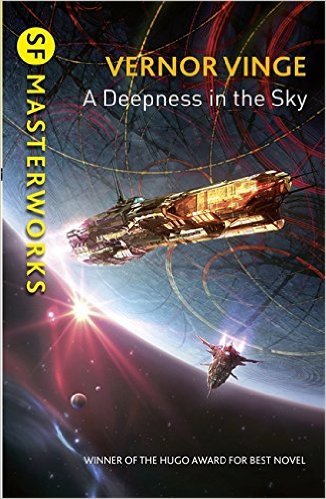
VingeFirstly, I received this week a finished copy of the new SF Masterworks edition of Vernor Vinge’s A Deepness in the Sky, for which I was lucky enough to be able to write the introduction. It has terrific new cover art by Sebastian Hue.
Secondly, I took over last month as chair of the trustees of the Science Fiction Foundation, a UK charity that publishes the journal Foundation, maintains the Science Fiction Foundation collection at the University of Liverpool, and undertakes a range of other work around the sf field. More news shortly about forthcoming SFF events.

Thirdly, I’m working this year on compiling a number of my non-fiction pieces into a book. Watch this space…

SF Foundation Masterclass

•February 15, 2015 • 1 Comment

I’m very happy to be able to say that I’ll be one of the teachers for this year’s SF Foundation Criticism Masterclass. My fellow teachers will be Pat Cadigan (Hugo and Clarke-Award-winning author) and Nick Lowe (classical scholar and sf film critic). The Masterclass is being held from 17-19 July in the marvellous and appropriate setting of the Royal Observatory, Greenwich. Details of how to apply are here; there are comments from attendees at past Masterclasses here.

Days of Fear and Wonder

•November 23, 2014 • Leave a Comment

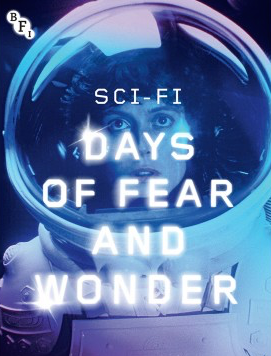
Cover2Just popping in to note that I have an essay in the BFI‘s new compendium Days of Fear and Wonder, put together to mark their major current sf film season.

I know I’ve not posted much here lately – partly because I’ve been completing an MSc, and partly because I’ve been starting work on some new projects which I’ll describe here soon. There are lots of interesting things to come in 2015, as will become clear soon…

Worldcon schedule

•July 20, 2014 • Leave a Comment

As noted earlier, I’ll be at Loncon 3, the World Science Fiction Convention being held in London in mid-August. I’ll be on a couple of panels, as per the following schedule. If you’re there, do come up and say hi!

When is a Fantasy not a Fantasy?
Thursday 13:30 – 15:00, Capital Suite 9 (ExCeL)

Many of the more liminal fantasies play with the idea of psychosis as a blurring the boundaries of the world (Megan Lindholm’s Wizard of the Pigeons, Steve Cockayne’s The Good People, Jo Walton’s My Real Children); many ‘mainstream’ novels present worlds built of dream, the afterlife, or metaphor. What determines whether something is a fantasy or not: authorial intent, genre signals, reader perceptions? How far should we accept characters’ own sense of the world, and when can we judge them as unreliable witnesses?

Miriam Weinberg (M), Greer Gilman, Paul Kincaid, Graham Sleight, Jonathan Strahan, Catherynne M. Valente

The Evolution of the Encyclopedia of Science Fiction
Friday 18:00 – 19:00, Capital Suite 13 (ExCeL)

The SFE is 35 this year, and is now in its third edition. This panel will discuss how the SFE came about, and how it has changed with the times. What are the processes that go into creating an encyclopedia, and what are the pitfalls? How has the transition to an online format shaped the third edition? And in what ways does its increasing internationalisation reflect transformations in the field at large?

Rick Wilber (M), Jonathan Clements, John Clute, David Langford, Graham Sleight(, Neal Tringham

Becoming History
Sunday 11:00 – 12:00, Capital Suite 16 (ExCeL)

In a review of Kate Atkinson’s Life After Life, John Clute wrote, ‘It is not easy — it should not really be feasible — to write a tale set in twentieth century that is not a tale about the twentieth century.” A number of other recent books, including Peter Higgins’ Wolfhound Century, Christopher Priest’s The Adjacent, and Lavie Tidhar’s The Violent Century, are also ‘about’ historicising the near-past in this sense. How is the fantastic gaze operating on the twentieth century? Do we have enough distance to see it clearly yet?

Graham Sleight (M), John Clute, Peter Higgins, Elizabeth Hand, Christopher Priest

Looking Back On Anger: remembering 70s sf in the 21st century
Sunday 13:30 – 15:00, Capital Suite 4 (ExCeL)

Almost 30 years on from Jeanne Gomoll’s “Open Letter to Joanna Russ“, this panel will look at how the science fiction of the 70s is remembered today. Which works have stayed in the public eye, and which have faded away? Whose commentary still speaks to us, and what was the conversation like back then? What has proven to be problematic, and what remains unresolved?

Pat Murphy (M), Jeanne Gomoll, Lesley Hall, Christopher Priest, Graham Sleight

Regenerating the Closet
Monday 13:30 – 15:00, Capital Suite 4 (ExCeL)

In their classic incarnations, shows such as Star Trek and Doctor Who attracted substantial queer fanbases and uncountable fanworks that worked to queer the text — the latter discussed in one of this year’s Hugo nominees, Queers Dig Time Lords. Both franchises have been relaunched in the last decade. What do these new versions, products of a supposedly more tolerant time, tell us about changes (or lack of changes) in narrative and social expectations for queerness and queer characters?

Graham Sleight (M), Leo Adams, S. J. Groenewegen, Erin Horakova, Amal El-Mohtar

Geoff Ryman interview

•July 19, 2014 • Leave a Comment

I’m just back from a great Readercon, and looking forward to going to Loncon 3, the World Science Fiction Convention, next month. I’ll be posting my Loncon schedule shortly, but in the meantime this is a quick post to say that I’ll be interviewing Geoff Ryman – author of The Child Garden, 253, Lust, and Was... (among others) for the BSFA on 30th July in London. Full details are here – admission is free and all are welcome.